Elbaum's World 40: Unmasking Conventional Wisdom 🎭
Hey everyone,
Hope you've had a great week. I had a busy one studying for a professional certification as well as trying to get all of my other weekly goals done. I've started bullet journaling by using one of those journals that have dotted pages, and I've found some success with that strategy. Curious about the strategies you use to stay on track. On to this week's idea:
Unmasking Conventional Wisdom 🎭
I assume it's obvious by now, but the main topic of this newsletter often ends up being what has most been on my mind in any given week. And if you've been following my thoughts lately, it's probably not a surprise to say that I've been thinking a lot about work: how we choose our life's work, why we stay in certain jobs and what makes a good one.
On that note, I was reading Tim Urban's blog Wait But Why this week and found his article How to Pick a Career (That Actually Fits You). One quote in particular stood out:
Urban spends a decent amount of time talking about the influence that society, parents and preconceived notions about work have on how we end up choosing what we do. Some people call these ideas "invisible scripts"--assumptions that are baked so into our worldview that we don't question them at all.
I've been wondering how work might look for people in general if most of us weren't proceeding under the assumption of "I need to go get a well-paying job so I can afford my mortgage and send my kids to college and maybe retire someday." I have a mortgage, so I know that's a real cost and concern. And I'm a white American male who works in a well-paying field, which I know gives me the luxury of approaching work in a philosophical way rather than simply as a means to survive, as many in our country are forced to do. I'm just simply trying to point out some of the unconscious assumptions (who says you have to buy a house or have kids or send those kids to college if you do have them or stop working) that most of us live with on a daily basis.
Tim says it better than I do, and he also provides some helpful models for thinking about this kind of thing, so I'd recommend reading the article if you're interested in discussions like these. Where do you see your "invisible scripts" in work or in life?
Pete's Picks ✅
- What I'm Reading: I've been on a big audiobook kick this year and recently picked up The Innovators from Audible. It tells the story of the people who laid the groundwork for the digital revolution including Lovelace, Turing, Gates, Jobs, etc. It's been great to absorb some of the heritage of my industry and grow in appreciation for just how far we've come.
- What I'm Watching: HBO recently came out with the first of a two-part series on Tiger Woods called Tiger. As someone who remembers his fall from grace much more than the preceding ~12 years, it's been interesting to explore just how much he was on an MJ/Federer level of success and mythos before his affairs came to light. The second part comes out tonight.
- What I'm Listening To: I previously mentioned the Acquired podcast, and I've been listening to their episode on Epic Games, which is the maker of Fortnite and also happens to be a few miles down the road from me. It's a fascinating listen if you're interested in the story and strategy of how their games and game engine changed PC gaming.
This Week's Video 📹
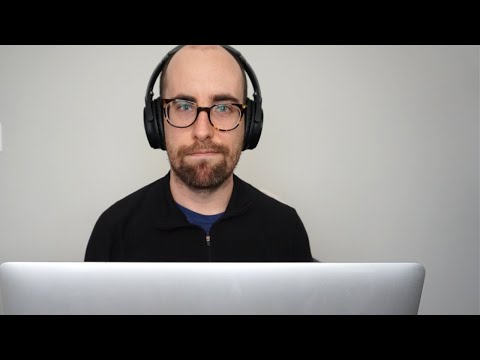
How to Become a Software Engineer in 2021
Tweet of the Week 🐦
Learn to code in 2021 and get a job!
— Peter Elbaum (@peterelbaum) January 14, 2021
> Acquire the bare minimum skills (HTML/CSS/JavaScript)
> Learn by doing (build projects!)
> Document the process
> Apply for jobs the smart way
THREAD 👇
Cheers,
Peter
Hi, I’m a creator
Drinking the AI Kool-Aid 🥤 I'll admit it: I'm fully on the AI bandwagon. To explain why, I think it's helpful to contrast with the crypto hype train. For me, it comes down to application. The blockchain is an interesting idea, but at the end of the day it still hasn't answered the question "How will this change my life in a tangible, everyday way?" On the other hand, for the current large language models (like GPT-4, etc.), the use cases are plentiful: Virtual assistant? Check. Personal...
The Weight of Self-Expectation 🏋️♀️ I've been thinking lately about how burdensome it can feel to not do the things that I say I want to do. Some of us want to lose weight. Others imagine learning a new language. For me, there are a few things I said I wanted to accomplish while self-employed that haven't happened yet. And it's been over a year. For a long time, my version of "losing weight" has been building a SaaS (software as a service, i.e. web app that you pay for), and over the past few...
The Law of Your Very Self 📖 I mentioned a few newsletters ago that I've been reading The Second Mountain by David Brooks. I'm a slow reader, so I'm still going through it. This week, a chapter on the idea of vocation stood out to me. In particular, there was a thought-provoking subsection under the heading "The Law of Your Very Self." In it, Brooks mentions an idea that I've been trying to spend a bit of time thinking about. Essentially, the concept is to take stock of your passions going...